Explore the rich history of Sansone’s Subdivision in Geneva, Illinois. From its founding in the 1920s to the vibrant community it is today, each era has shaped the character and charm of this beloved neighborhood.

1920s – 1940s
The Early Years
The Sansone Subdivision began in the 1920s when the Sansone family first platted the land in Geneva, Illinois. The original plat laid out the streets and lots that would become the foundation of the community, including the iconic intersection of State and Charles Streets. These early years established the character and charm of the neighborhood.
1950s – 1960s
The Middle Years
By the 1950s and 60s, Sansone’s Subdivision had grown into a thriving community. New homes were built along Charles Street and neighboring avenues, attracting families who valued the tree-lined streets and friendly neighborhood atmosphere. The community formed lasting bonds during this period of steady growth.


1970s – 1990s
A Maturing Community
The decades from the 1970s through the 1990s saw Sansone’s Subdivision mature into an established neighborhood. Long-time residents raised families here, and the homes and landscapes took on the distinctive character that defines the area today. Community events and gatherings strengthened the bonds between neighbors.
2000s – Present
The Modern Era
Today, Sansone’s Subdivision continues to be one of Geneva’s most cherished historic neighborhoods. The streets of Charles, State, and Lincoln remain lined with well-maintained homes, and residents take great pride in preserving the legacy of the Sansone family. The subdivision stands as a testament to thoughtful community planning and neighborly spirit.

1970s – 1990s
A Maturing Community
The decades from the 1970s through the 1990s saw Sansone’s Subdivision mature into an established neighborhood. Long-time residents raised families here, and the homes and landscapes took on the distinctive character that defines the area today. Community events and gatherings strengthened the bonds between neighbors.
2000s – Present
The Modern Era
Today, Sansone’s Subdivision continues to be one of Geneva’s most cherished historic neighborhoods. The streets of Charles, State, and Lincoln remain lined with well-maintained homes, and residents take great pride in preserving the legacy of the Sansone family. The subdivision stands as a testament to thoughtful community planning and neighborly spirit.
1970s – 1990s
A Maturing Community
The decades from the 1970s through the 1990s saw Sansone’s Subdivision mature into an established neighborhood. Long-time residents raised families here, and the homes and landscapes took on the distinctive character that defines the area today. Community events and gatherings strengthened the bonds between neighbors.
2000s – Present
The Modern Era
Today, Sansone’s Subdivision continues to be one of Geneva’s most cherished historic neighborhoods. The streets of Charles, State, and Lincoln remain lined with well-maintained homes, and residents take great pride in preserving the legacy of the Sansone family. The subdivision stands as a testament to thoughtful community planning and neighborly spirit.
1970s – 1990s
A Maturing Community
The decades from the 1970s through the 1990s saw Sansone’s Subdivision mature into an established neighborhood. Long-time residents raised families here, and the homes and landscapes took on the distinctive character that defines the area today. Community events and gatherings strengthened the bonds between neighbors.
2000s – Present
The Modern Era
Today, Sansone’s Subdivision continues to be one of Geneva’s most cherished historic neighborhoods. The streets of Charles, State, and Lincoln remain lined with well-maintained homes, and residents take great pride in preserving the legacy of the Sansone family. The subdivision stands as a testament to thoughtful community planning and neighborly spirit.
1970s – 1990s
A Maturing Community
The decades from the 1970s through the 1990s saw Sansone’s Subdivision mature into an established neighborhood. Long-time residents raised families here, and the homes and landscapes took on the distinctive character that defines the area today. Community events and gatherings strengthened the bonds between neighbors.
2000s – Present
The Modern Era
Today, Sansone’s Subdivision continues to be one of Geneva’s most cherished historic neighborhoods. The streets of Charles, State, and Lincoln remain lined with well-maintained homes, and residents take great pride in preserving the legacy of the Sansone family. The subdivision stands as a testament to thoughtful community planning and neighborly spirit.
1970s – 1990s
A Maturing Community
The decades from the 1970s through the 1990s saw Sansone’s Subdivision mature into an established neighborhood. Long-time residents raised families here, and the homes and landscapes took on the distinctive character that defines the area today. Community events and gatherings strengthened the bonds between neighbors.
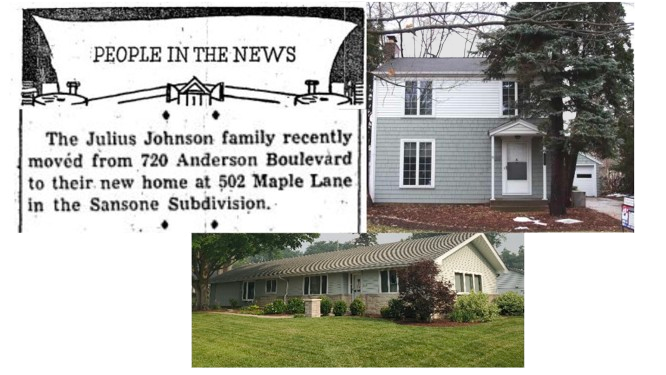
DID YOU KNOW
Almost half – 64 or 46% of the original households in Sansone’s Subdivision came from right here in Geneva. Many came from just blocks away, from teens, twenties, and forties housing in neighborhoods north of Center Street and east of Anderson Boulevard. The Julius Johnson family is one such household that moved in 1957 from a 1946 Colonial Revival home on Anderson Boulevard to a sprawling new Ranch on Maple Lane.